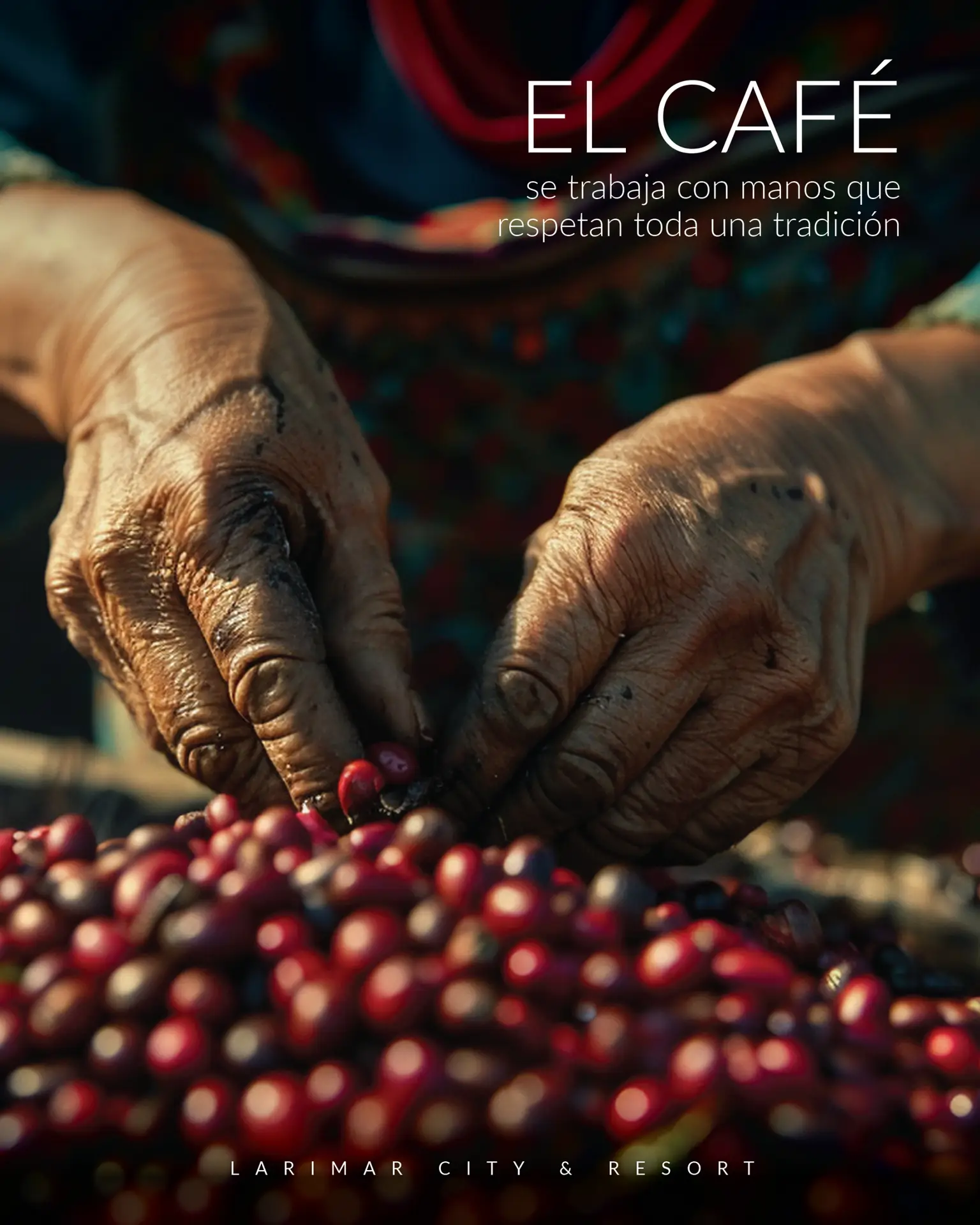
Santo Domingo Coffee: the aroma that defines a nation and conquers the world
Santo Domingo Coffee: the aroma that defines a nation and conquers the world
Coffee isn't just a drink in the Dominican Republic — it's a tradition deeply rooted in the country's culture, economy, and identity. From the mountains where it's grown to the family tables where it's shared every morning, Santo Domingo coffee represents national pride, history, and a strategic opportunity for tourism and investment.
In large-scale projects like Larimar City & Resort, Dominican coffee culture also becomes a differentiating element that connects visitors and investors with the authentic essence of the country. In this article we analyze the history, the economic and cultural impact of Dominican coffee, and its potential to enrich tourism experiences and high-end real estate projects.
The origin of coffee in the Dominican Republic
Coffee arrived in the Dominican Republic in the 18th century and quickly became one of the country's most important crops. According to historical records, Spanish settlers introduced cultivation around 1735, initially in areas like Barahona, from where it expanded to other mountainous regions of the territory.
These regions offered ideal conditions:
- Altitudes between 800 and 1,200 meters above sea level
- Humid climates and stable temperatures
- Nutrient-rich soils
These characteristics make it possible to grow mainly arabica coffee, known for its smooth and complex aromatic profile. Over time, Dominican coffee went from being just another agricultural crop to becoming one of the country's gastronomic and cultural symbols.
A Dominican cultural symbol
In the Dominican Republic, coffee is part of daily life. It's common to start the day with a strong, aromatic cup, share it after meals, or offer it as a gesture of hospitality to visitors.
Some elements that define Dominican coffee culture:
- The greca dominicana, the traditional preparation method
- Coffee that's strong, short, and very aromatic
- The social ritual of sharing coffee with family or guests
This tradition has consolidated emblematic brands like Café Santo Domingo, produced by Industrias Banilejas (Induban), a company founded in 1945 that has become the leader of the national market. Today, this brand and other Dominican varieties are exported to numerous countries, taking Dominican flavor to international markets like the United States, Europe, and the Caribbean.
The economic impact of Dominican coffee
Beyond its cultural value, coffee is an important economic driver for the country's rural areas. Key data from the sector:
- The coffee industry generates around 50,000 permanent direct jobs and more than 70,000 temporary jobs
- Approximately 28,000 families depend directly on coffee farming
- Coffee exports exceeded US$30 million in 2022
Cultivation also extends across 27 Dominican provinces, making coffee a key activity for rural development and the conservation of mountain ecosystems.
Dominican coffee and its tourism potential
In recent years, coffee has also become a strategic asset for gastronomic and experiential tourism. Global trends show travelers increasingly seek:
- Authentic cultural experiences
- Local gastronomy
- Products with history and origin
Dominican coffee fully meets these requirements. Some emerging initiatives include:
- Coffee routes in mountain areas
- Harvest and roasting experiences
- Specialty coffee tastings
- Rural tourism linked to plantations
These types of experiences help diversify the country's tourism offering, traditionally centered on sun and beach.
Dominican coffee and sustainability
Another key aspect is the positive environmental impact of coffee farming. Traditional plantations are developed under agroforestry systems that:
- Protect biodiversity
- Favor water retention
- Reduce soil erosion
This production model is consistent with new trends in sustainable tourism and responsible urban developments — values increasingly important in large-scale projects. For initiatives like Larimar City & Resort, integrating the country's sustainable agricultural products reinforces its positioning as a modern, responsible destination connected to its natural environment.
A Dominican pride with international projection
Santo Domingo coffee isn't just a drink: it's a symbol of national identity, agricultural resilience, and economic potential. Its history combines:
- Agricultural tradition
- Business innovation
- Culinary culture
- Tourism opportunities
In a global context where travelers seek authenticity, products with origin, and unique experiences, Dominican coffee has everything it needs to consolidate as one of the country's great ambassadors.
For visionary projects like Larimar City & Resort, integrating this cultural legacy not only adds value for the visitor — it also strengthens the connection between tourism development, national identity, and sustainability. Because in the Dominican Republic, every cup of coffee tells a story: of its land, its people, and its future.
Natalia Kvirikashvili Sadikova
Communications Department
CLERHP
Featured projects
Explore the residential projects of Larimar City mentioned in this article.



Smart Investment
Join the first Smart City in the Caribbean. Discover how Larimar City redefines safety and property value in Punta Cana.
Request information